Argumentation is, essentially, an argument. The point is to persuade the reader to one side or the other. Chapter 14 discusses this in-depth.
Persuasion: how a writer influences the audience to follow a course of action or adopt a belief. (p. 524)
Most argumentative essays are riddled with persuasive points. They can translate over to argumentative points when they become more concrete.
Argumentation: the appeal to reason.
The points that a writer hits to connect with the audience and win them over are what I've known as pathos (emotion), ethos (reputation of the writer), and logos (logical appeal).
This chapter emphasizes the importance of making claims that are well-supported. It reminds us that the audience will mostly be skeptical, and to not assume anything will be understood in the essay unless it is very clearly stated and backed up.
It covers similar topics to the Exemplification chapter, in that support/examples should be relevant, representative, typical, and sufficient. (p 528). Chapter 14 also reiterates the need for documentation or proof of some sort in order to avoid plagiarism.
Things I learned:
A Rogerian argument does not follow the typical wrong/right argument. It involves the agreement points of both arguments, and uses them to find common ground.
Syllogism: consists of a major premise (general statement), minor premise (related but specific statement), and a conclusion.
- This is a type of deductive argument.
There are tons of logical fallacies. Tons. I've done most of them.
Overall, this was a pretty informative chapter. It reviewed a lot for me but also threw in some new things that I wouldn't have associated with argumentative essays.
-Devon
Showing posts with label DevonD. Show all posts
Showing posts with label DevonD. Show all posts
Thursday, October 1, 2015

Thursday, September 17, 2015
Outline For Tim's Exemplification Essay!
Tim's Essay Outline done by Devon
Intro: I believe the federal ban on the recreational use of marijuana should be lifted.
1. What the federal ban on recreational marijuana looks like.
Intro: I believe the federal ban on the recreational use of marijuana should be lifted.
1. What the federal ban on recreational marijuana looks like.
- Medical vs recreational ban
2. Legalized states.
- How are they different? (dispensaries, local tolerance, ect.)
- How are they the same? (how are they influenced by the federal ban?)
3. What would legalization nationwide look like?
- Growers and sellers rules
- Government involvement in growing/selling
- State restrictions: any/what/where?
4. Influence on national budget/other benefits
- Where would the tax money from sales go?
- Specific programs it would benefit
- How would it help the economy?
Conclusion.
Logical Fallacy
Jumping to a conclusion
The book says: this fallacy occurs when a conclusion is reached on the basis of too little evidence.
We say: assuming the outcome without enough research/evidence.
Ways To Avoid It:
- More evidence!
- Less assuming
- Better flow
- Thorough research

The book says: this fallacy occurs when a conclusion is reached on the basis of too little evidence.
We say: assuming the outcome without enough research/evidence.
Ways To Avoid It:
- More evidence!
- Less assuming
- Better flow
- Thorough research
Image Source
-Devon & Tim
Exemplification Essay
Minimum wage is not a comfortable wage, but it is a livable wage.
--The thesis statement I will be exploring in this essay.
Devon D
Edit: Changed my essay topic at the last minute. New thesis.
The positive and negative effects of social networking have expanded and increased over the years, spanning from relationships with family and friends, to employment and education.
Tuesday, September 15, 2015
Just Walk On By: Questions and Response
Comprehension:
1. Staples characterizes the woman he encounters in paragraph 1 as a "victim" of the way she acts. She appears to be worried and moves to cross the street, making it clear that she feels she is a victim and finds him intimidating, even though the author is completely harmless.
2. Staples can alter public space because of his appearance. He writes this from personal experience, has noticed the way people lock their car doors and cross to the opposite side of the street. He knows he can alter just by walking through.
3. He has insomnia, so he walks the streets at night.
4. The "making of a young thug" are those where a young man is seduced by the violence, "by the perception of themselves as tough guys." (Para. 8) Staples also states that men are supposed to be fighters, to be hostile and have the "fighter's edge" in everything they do.
5. Staples moves with care, gives people more space, and whistles relaxing tunes while he walks places. He pays attention to how closely he is to people, makes it apparent that he is not following them, and is generally very cautious.
---
Purpose and Audience:
1. Thesis: It was in the echo of that terrified woman's footfalls that I first began to know the unwieldy inheritance I'd come into- the ability to alter public space in ugly ways.
2. He uses personal examples throughout the essay, and throws in a few direct quotes from essays he's read that relate. His personal examples make it a strong essay because it is from his viewpoint, and he uses so many stories to back up his point that it is difficult to argue against him at all.
3. He assumes that women are always "victim" and that they all would move across the street and show fear. He also assumes everyone is scared of him.
4. He is trying to induce the fear that people feel around him, and uses that as a hook to bring people in. It works because it draws you in: you worry about what he is doing wrong from the beginning.
---
Style and Structure:
1. Staples mentions Podhoretz because it shows that he is not the only one with the viewpoint. He uses it for a concrete example to display that others have experienced it as well.
2. The anecdote is a great strategy because most of his examples are personal. Another opening strategy would not do the essay justice.
3. If he had more concrete examples woven into his personal examples, he would make a better argument. More concrete examples would add a more brutally honest side to the essay, and make it more apparent that it is not just his perspective.
4. He uses mostly personal examples with no clear order, weaving the few outside examples he has through his experiences throughout the essay.
5. Thug- Synonyms: criminal, gangster, villain, hoodlum. Thug, to me, describes a poorer person with a lack of character and a need to cause trouble. Those other synonyms are not as strong in showing what Staples means.
---
Journal Entry:
Tim: When I first started going to the gym, there were some guys I found intimidating that were using the punching bags, bodies covered in tattoos, that are some of the nicest people I know now.
Devon: I've been in a ton of situations where someone came across threatening, and used to run scared, but now I stand my ground and try to brave through the situation.
---
Staples observation concerning the "male romance with the power to intimidate" is accurate. It's seen everywhere you turn, from television to daily life; men are consistently trying to intimidate other men, and to outperform those around them. In his essay he means that this power to intimidate is alluring, and that it took some of the men he grew up around. They became lesser versions of their non-intimidating selves. They became thugs.
-Devon, Tim
Monday, September 14, 2015
Chapter 8: Exemplification
Personal Reaction:
A chapter on exemplification, as one would generally assume, is all about explaining yourself. Using enough examples, placing them in the right spots, and using a variety of them in an essay. The chapter almost over-explains in attempting to get the point across: exemplification makes or breaks an essay. Good essays will have tons of examples, poor essays will have more generalization.
I personally have a relatively easy time with exemplification, but a more difficult time finding a variety of examples to back up my statements.
One of the more important issues addressed in this chapter is the choppiness that can result from having too many examples and not connecting them correctly. Too many staccato paragraphs makes for a difficult to read essay, so the best thing that can be done here is to edit, edit, edit. Edit until the essay flows, take out paragraphs, add in transitions. Edit. A. Ton.
The essays that are seen throughout the chapter do a wonderful job of making it clear how necessary exemplification can be, if the topic requires it. Carefully quoting from a similar work can add depth and persuade the reader to see from the writers point of view.
Overall, this was a fairly informative chapter. It contains a lot of information that I'll be able to refer to later, but also reiterates the importance of organization and having a clear topic.
- Devon D
Thursday, September 3, 2015
Art in Schools: Thesis Statement
When constructing a thesis statement, I find asking myself a couple of questions helps:
What about art in schools is interesting/controversial?
- Art brings color and liveliness to somewhat more mundane subjects and daily activities
- Creativity is controversial; art vs. other subjects
Does art take away or add to the learning environment?
- helps with visual learning...can connect things in new/other ways.
- visual learning
Thesis:
Art in schools is important because it encourages creativity, while also helping with alternative thinking and visual learning.
- Devon D
What about art in schools is interesting/controversial?
- Art brings color and liveliness to somewhat more mundane subjects and daily activities
- Creativity is controversial; art vs. other subjects
Does art take away or add to the learning environment?
- helps with visual learning...can connect things in new/other ways.
- visual learning
Thesis:
Art in schools is important because it encourages creativity, while also helping with alternative thinking and visual learning.
 |
| image source: jamonkey.com |

- Devon D
The Atlantic Blog Review
 |
| Image source: TheAtlantic.com |
This week our group followed different blogs. Of all of them, The Atlantic was the top choice. The Atlantic is a quality news blog that follows news events from around the world, covering a wide variety of subjects. I recently had the opportunity to follow it daily, and these are some of my observations.
The blog is very organized, and user-friendly. On the home page, you are presented with a mass amount of stories, carefully sectioned according to content. Each section is headlined with the top stories of the day, and they are labelled specifically. U.S., global, entertainment, cultural news, and more is readily available. The articles themselves are written and presented really well, and the authors appear to be well-informed and reliable. The blog itself looks really professional, taking the look of an online news paper. The articles are eye-catching, titled in bold, with a short summary and the author's name in bright red. Pictures are attached to almost every article, adding to The Atlantic's great overall appeal.
We would highly recommend The Atlantic. It is visually pleasing, informative, and well organized. With it's high variety of subjects and spectacular authors, there is something for everyone.
- Timothy Wellmann, Devon D
Tuesday, September 1, 2015
Reverse Outline
Introduction:
I. Anecdote- Gordinier talks about personal emails and how he writes them
Thesis: "See the e-blurt, like so many modes of personal expression, is all about power."
Support:
1. Discusses how busier is equal to more powerful
2. Hip-powerful: show power and claim to be hip by following the trends to misspell
3. Deciphering messages makes the people beneath work harder
4. The visual chart on different text speak with translation
5. Counter-argument: text speak could come back to haunt them if records of bad emails are pulled by lawyers
Conclusion: "...the people who really understand [power] don't say anything at all."
-Timothy Wellmann, Smriti, Devon D.
Monday, August 31, 2015
Personal Reaction, Chapter 3
This chapter felt like a repeat of everything I've learned previously. It refreshed a few things I needed to brush up on, mostly about essay organization and making sure there is enough support in the essay, but that is nothing new. The descriptive checklists are something I will be using in the future, just to double check my work and to make sure I'm asking all the right questions. I doubt I will be consulting it for essay structure, but it never hurts to have a back-up. Mostly, I found this chapter tired and overdone. The Orwell essay was a unique fit for it, and was useful in that it showed a different type of essay than the typical three point, five paragraph style we have all come to know and write on autopilot.
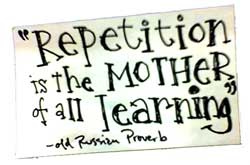
The first few chapters in this book have confirmed that this class will help me to start writing for school again, and not just writing for work or to my friends. The chapters do have helpful tips and tricks, as well as information to help if I'm stuck while writing. While it is the basic fundamentals of English that we all must learn to become better writers, it is still a bit dry and boring thus far. It might be helpful for me with writing longer essays, as I tend to be a very concise writer and feel like I'm rambling when I write more than a page or two.
Until next class, everyone!
-Devon D.
Steroids in the Hall of Fame Response 1-4
What is the writer's general subject?
The writers general subject is drug and alcohol usage in baseball, and how the view has changed as baseball itself has evolved.
What is the writer's main point?
Chafets states explicitly that: "If [baseball] surrenders to the moralists who want to turn back the clock to some imagined golden era, and excommunicates the greatest stars anyone has ever seen, it will suffer the fate of all battlefields located on the wrong side of history. Obscurity." With this statement, he drives his main point home. He wants baseball to be less about who is doing what drugs, and more about how well the game is being played.
What are the writer's key supporting points?
In paragraph 3, Chafets implies that the use of drugs helped performance by lowering stress: "...players have used whatever substances they believed would help them perform better, heal faster, or relax during a long and stressful season."
His secondary point is that "chemical enhancement won't kill the game; it is the cover-up that could be fatal"(Paragraph 10). One of his final key statements discusses that maturity. He states that "...baseball players aren't children...If they want to use anabolic steroids...it should be up to them." (Paragraph 12)
Does the writer seem to have a particular purpose in mind?
Chafets purpose is simple. He wants the cloak to be taken off, for baseball and all its players to come out from the shadows and live the life they chose. He wishes for the Baseball Hall of Fame to be more than an imagined dreamland, or a war-zone, and become an obtainable goal.
-Devon D.
Sunday, August 30, 2015
Interviews (Day One): Smriti

Smriti is brave, and very smart; that is clear to me within minutes of our conversation. She moved here in 2011 from Nepal, and has had to work her way up to English 121, continuously improving her English along the way. I have never been out of the country myself, so I have to imagine how difficult it is to move somewhere foreign, learning a new language along the way. She moved here because of her love for numbers, and is seeking an Accounting degree. She has been at Front Range since 2013, and knows the campus well. In that time, she has taken one other English class: a reading and composition class. Her preferred method of writing essays is pen and paper. She wrote out essays more frequently in her previous English class, and says she prefers it to typing one up on a computer.
We are both seeking college
degrees, and this has taken us to the same English class. She wishes to improve
her English as a whole, while I wish to improve my writing style. While I foresee
very few problems with English 121, she has concerns because English is her
second language. She has built up to this class over past few years, whereas it
is a simple stepping stone for me. She and I both enjoy workshopping, because
it gives a personal, one-on-one view of another’s writing and critique. While
she is here for Accounting, I am here to eventually become a nurse. While our
worlds may be totally different, on paper, Smriti is easy to talk to and our
interview was enjoyable.
- Devon D.
Subscribe to:
Posts (Atom)